
What Is OEM Eyewear Manufacturing? Process, Costs, and Timelines
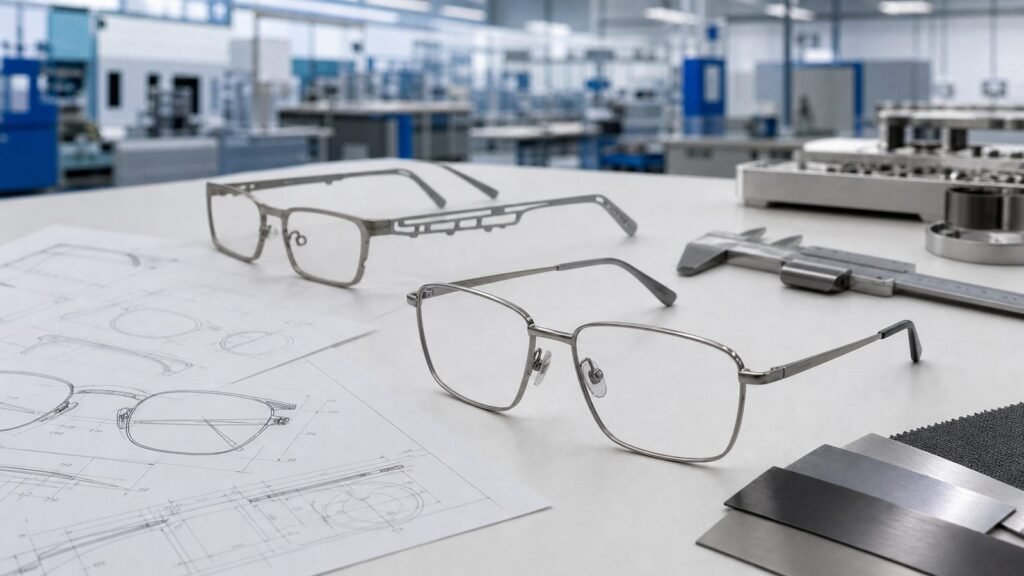
OEM eyewear manufacturing is the process of turning a brand's product requirements into finished frames under that brand's name. The factory may engineer parts, build tooling, source materials, assemble frames, apply finishes, and manage production testing. The brand still owns the product brief, market decisions, approvals, and legal responsibilities agreed in the contract. Costs depend on the design and process route, not on the three letters OEM. Timelines depend just as much on fast decisions and complete specifications as they do on factory capacity. This guide shows what happens between the first drawing and the first approved shipment.
What does OEM eyewear manufacturing mean?
OEM stands for original equipment manufacturer. In eyewear, an OEM factory makes frames or complete eyewear to a customer's specification and applies the customer's brand according to the purchase agreement.
The customer's input can range from a complete engineering package to a rough concept. A complete package may include CAD files, dimensions, material grades, colors, logos, component standards, packaging, and test requirements. If the brief is incomplete, the factory must do more development work before production can begin.
OEM does not automatically mean that every operation happens under one roof. A frame factory may use approved specialists for plating, PVD coating, heat treatment, lens production, or laboratory testing. The buyer should know which steps are subcontracted and how the main supplier controls them.
Our OEM eyeglass frame manufacturing service covers project-specific development. The broader eyewear manufacturing overview explains the production capabilities that can sit behind an OEM program.
OEM, ODM, and private label are not the same
These terms are used loosely, so the contract and drawings matter more than the label.
| Model | Typical starting point | Design ownership | Level of customization | Main buyer task |
|---|---|---|---|---|
| OEM | Buyer specification or jointly engineered concept | Defined by contract | High | Control requirements, approvals, and changes |
| ODM | Manufacturer's existing design or design platform | Often retained or licensed by manufacturer | Medium | Confirm exclusivity and allowed modifications |
| Private label | Existing finished model or catalog product | Usually manufacturer or third party | Low | Approve branding, color, packaging, and compliance |
A project can move between these categories. A buyer might start with an ODM chassis, then commission custom temples and colors. Record which drawings, molds, fixtures, and surface recipes belong to each party before paying development fees.
Who is responsible for the finished product?
Outsourcing production does not outsource every responsibility. The brand decides where the product will be sold and which claims appear on packaging and marketing. The manufacturer controls the processes it performs and must meet the agreed specification.
ISO guidance on externally provided processes describes the need to define controls for purchased and outsourced work. A supplier's ISO 9001 certificate can support a quality-system review, but it does not certify that a particular frame complies with every market rule.
The responsibility matrix should name an owner for:
- product specifications and controlled drawings;
- material and component approval;
- labeling, claims, and market compliance;
- tooling, fixtures, and design files;
- sample approval and change control;
- production inspection and laboratory testing;
- shipping documents, traceability, and complaint handling.
If two columns both say "shared," add names and deadlines. Shared responsibility without an owner is often responsibility on vacation.
The OEM eyewear manufacturing process
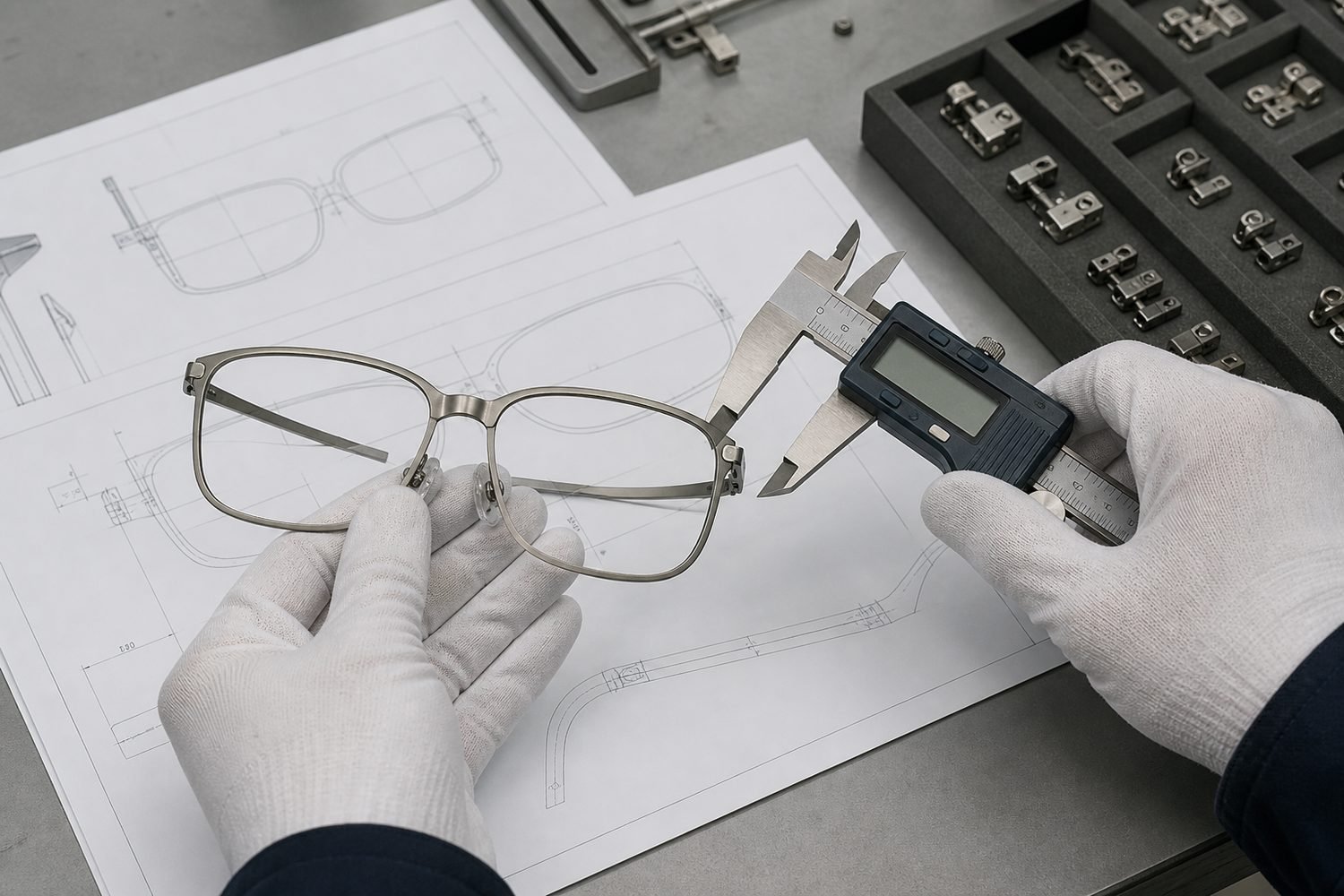
1. Build the product brief
The brief should define the wearer, frame type, eye and bridge sizes, temple length, material, target weight, finish, colors, logo method, lens type, packaging, sales markets, and target order quantity. Add reference samples when feel or fit is difficult to describe.
Separate fixed requirements from preferences. A required titanium grade belongs in the specification. "Light but substantial" belongs in a discussion until someone converts it into weight and stiffness targets.
Product type and destination market determine the compliance plan. ISO 12870:2024 covers fundamental requirements and test methods for unglazed spectacle frames intended for prescription lenses. General-use sunglasses fall under ISO 12312-1:2022, together with its current amendments where applicable.
2. Run feasibility and request a structured quotation
The manufacturer reviews geometry, material availability, forming limits, joint design, surface finish, tooling, expected yield, and order volume. This is the design-for-manufacture review, often shortened to DFM.
A useful quotation separates development charges, tooling, samples, laboratory tests, packaging, unit price, and freight terms. It should also state the assumed quantity, color split, size mix, payment schedule, validity period, and excluded work.
The cheapest line at the bottom can hide expensive assumptions. Compare quotation scope before comparing totals.
3. Complete engineering and controlled drawings
The factory converts approved styling into production-ready data. Engineers define sections, tolerances, screw sizes, hinge movement, lens groove or rimless mounting details, weld locations, surface requirements, and inspection points.
For a titanium project, the exact material and condition should appear by component. "Titanium" is not enough. Our guides to titanium eyewear and titanium alloy eyewear explain why grades and processing routes matter.
Issue drawings with revision numbers. Email attachments named FINAL, FINAL2, and FINAL2-REAL are not a change-control system.
4. Make prototypes and develop tooling
Prototype methods depend on what the sample must prove. CNC machining can check shape and assembly before production tooling exists. Temporary fixtures can test weld positions. Appearance samples can confirm color and logo placement.
Tooling may include stamping dies, forming tools, injection molds, cutting fixtures, welding jigs, polishing fixtures, gauges, or custom assembly aids. Some tools are needed for mass production but not for the first prototype.
Record who owns each tool, where it will be stored, how long it will be retained, who pays for maintenance, and whether it can be used for another customer.
5. Review samples and freeze the specification
The buyer should inspect fit, dimensions, lens installation, temple pressure, hinge action, finish, logos, and packaging. Measure what can be measured. Comments such as "make it more premium" tend to create another sample round without telling the engineer what to change.
Return one consolidated review with marked photos, drawing references, acceptance limits, and a decision for each point. The supplier then issues the next revision. Freeze the bill of materials, drawings, colors, and test plan only after the approved sample matches them.
6. Approve a pilot run and golden sample
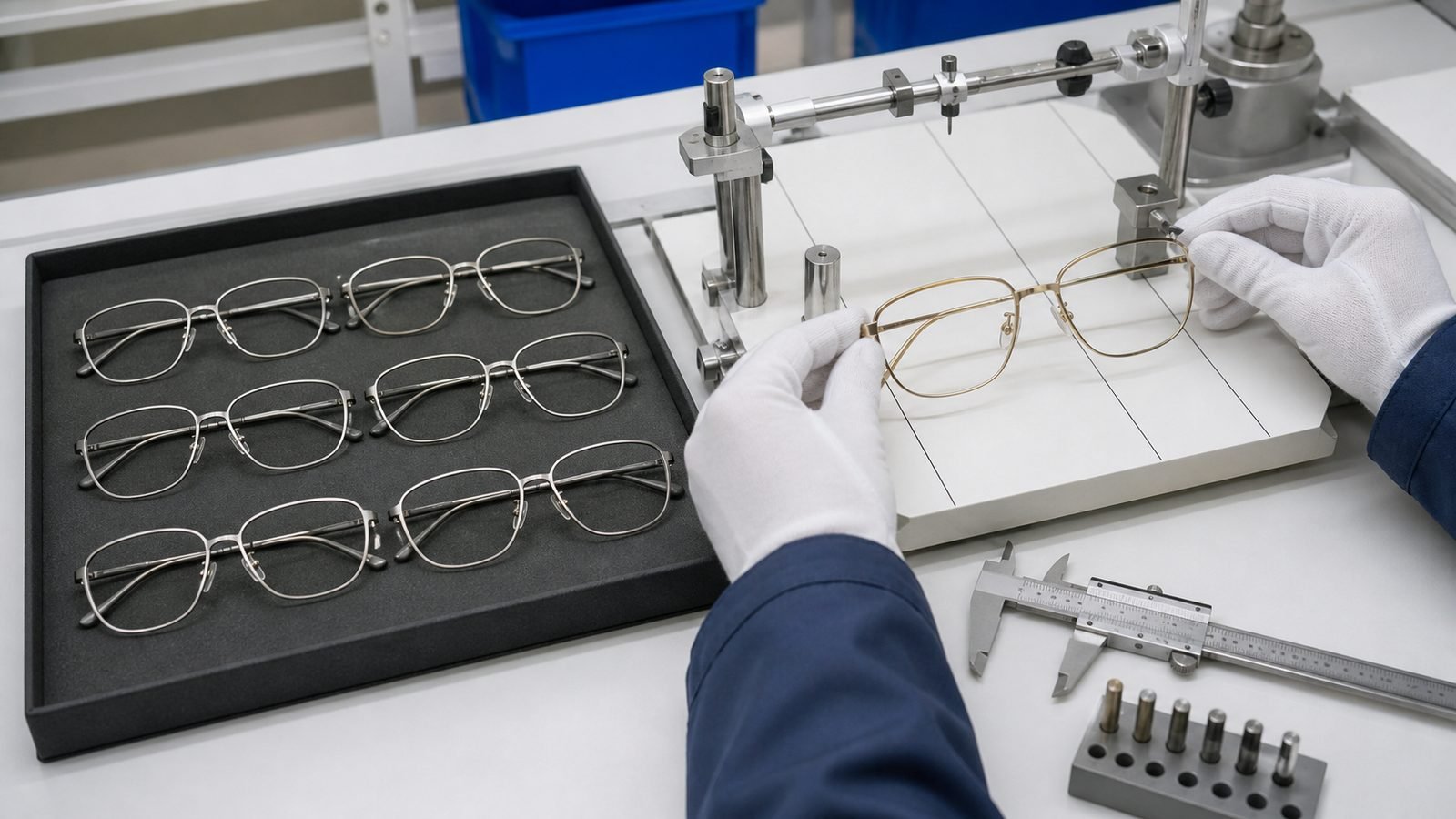
A pilot or pre-production run uses production-like material, tooling, operators, and settings. It checks whether the factory can repeat the approved result, not merely handcraft one good sample.
Approve a signed golden sample for each model, size, and relevant color family. Store matching samples with the buyer and manufacturer. The golden sample helps settle visual questions, while drawings and numeric limits control measurable features.
7. Produce and inspect the order
Production normally includes incoming-material checks, forming or machining, joining, surface preparation, finishing, assembly, adjustment, cleaning, and packing. In-process inspections should catch problems before the next operation makes them expensive to repair.
Final inspection combines the agreed product checks with a lot-sampling plan. ISO 2859-1:2026 provides AQL-indexed sampling schemes for inspection by attributes. AQL helps choose sample sizes and acceptance or rejection numbers. It does not grant permission to ship known defects or replace process control.
Our eyeglass frame quality control overview explains how material records, dimensional checks, mechanical tests, and cosmetic criteria work together.
8. Release, ship, and retain records
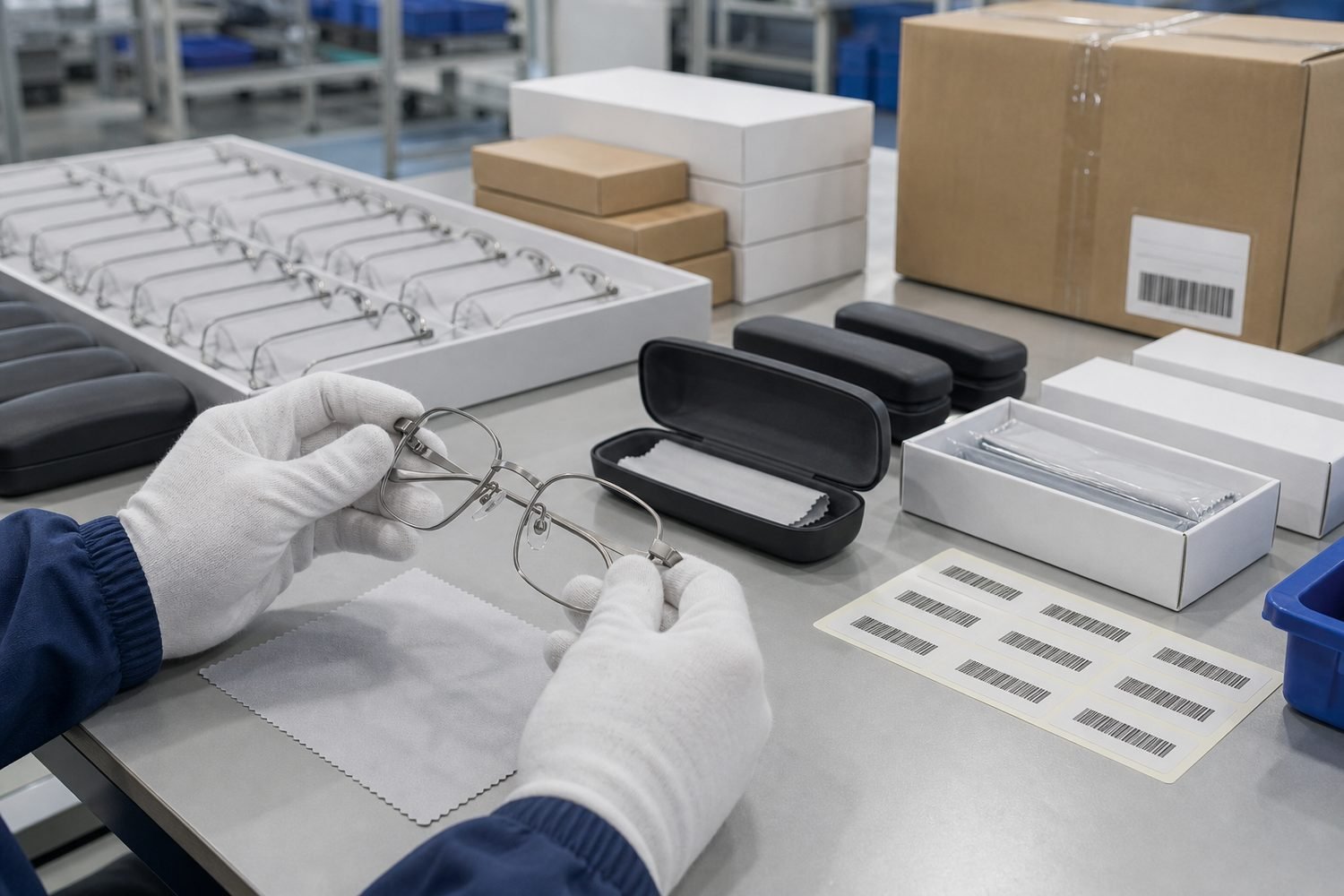
Before release, confirm quantities, carton marks, barcodes, labels, declarations, test reports, inspection status, and shipping terms. Keep lot records that connect materials, production dates, inspections, and shipment cartons.
For EU consumer products, the General Product Safety Regulation has applied since December 13, 2024. The economic operators in the supply chain should understand their roles before goods enter the market.
Retain the approved files and reports for the period required by the contract and target market. A complaint is easier to investigate when the lot history contains more than a shipping invoice and a shrug.
What drives OEM eyewear manufacturing costs?
There is no universal OEM frame price. A quote combines one-time development costs, recurring production costs, and commercial terms.
Development and engineering
This category covers concept refinement, CAD work, DFM, drawings, material research, project management, and sample review. A complete brief reduces back-and-forth, but a technically difficult design still needs engineering time.
Ask whether the development fee includes a fixed number of revisions. Record the price and lead-time effect of extra rounds.
Tooling, fixtures, and samples
Custom dies, molds, jigs, gauges, and polishing fixtures can cost more than the visible prototype suggests. A low-volume CNC route may need less dedicated tooling but more machine time per frame. A higher-volume formed route can reverse that balance.
Sample charges may include raw material, setup, outsourced finishes, lenses, packaging mockups, and courier fees. Confirm whether any charge is credited against a production order. Do not assume that it is.
Unit manufacturing cost
Material grade, material yield, component count, tolerances, machining time, forming steps, joints, hinge type, finish, color count, labor, expected scrap, inspection, and packing all affect the unit price.
Order quantity matters because setup and fixed work are spread across more pieces. Color and size splits can divide one large purchase order into several small production lots. The total quantity may look healthy while each setup remains tiny.
Testing and compliance
Budget for laboratory tests, pre-test samples, documentation, retesting, and market-specific labeling. A failed test can require a design change, another sample round, and a new laboratory submission.
Nickel-release requirements deserve early attention for metal parts that contact skin. ECHA's REACH nickel restriction entry lists affected articles and release limits. Material names alone do not prove the release performance of a finished coated frame.
Packaging, logistics, and commercial terms
Cases, cloths, boxes, labels, inserts, master cartons, inspections, freight, insurance, duty, and local delivery sit outside many factory unit prices. Currency, payment timing, and the agreed Incoterm also change cash requirements and risk allocation.
Ask for both the price basis and the named handover point. "Shipping included" is not precise enough for an international order.
Changes, rework, and delay costs
Late logo edits, new colors, revised hinges, smaller order quantities, expedited material, and rushed freight can move the budget quickly. A change after tooling or production begins should trigger a written impact review before work continues.
Late changes create tooling, rework, and freight charges that a complete specification would have avoided.
How long does OEM eyewear manufacturing take?
No standard sets an OEM development lead time. The planning ranges below are practical scheduling allowances for a new metal or titanium frame, not guaranteed industry averages.
| Stage | Planning allowance | Common causes of extension |
|---|---|---|
| Brief, feasibility, and quotation | 1 to 2 weeks | Missing dimensions, unclear market, supplier questions |
| Engineering and DFM | 1 to 3 weeks | Complex joints, material changes, incomplete approvals |
| Prototype and initial tooling | 3 to 8 weeks | Custom hardware, outsourced processes, tooling revisions |
| Each sample revision | 2 to 5 weeks | New material, finish rework, slow feedback |
| Pilot run and compliance testing | 2 to 5 weeks | Test-lab booking, failed checks, documentation gaps |
| Mass production | 4 to 10 weeks | Material lead time, color splits, capacity, rework |
| Final inspection and shipment release | 1 to 2 weeks | Inspection failure, packaging errors, document corrections |
For initial scheduling, allocate 12 to 28 weeks from a complete brief to ex-factory goods when a new metal frame needs one or two sample rounds. Ocean, air, rail, or road transit comes after that point. Custom components, several revisions, failed tests, peak-season capacity, and raw-material shortages can extend the schedule.
Do not add every maximum in the table and call it a forecast. Some work overlaps. Build the schedule around dependencies, named approval owners, and the date by which the brand must supply files or decisions.
How to get a quote that can survive production
Send the same controlled request-for-quotation package to each shortlisted supplier. Include:
- dimensioned drawings or clear concept views;
- frame type, material by component, and target weight;
- sizes, colors, logos, lenses, and packaging;
- destination markets and required test plan;
- forecast quantity, first order, size mix, and color split;
- requested sample stages and target launch date;
- commercial terms, delivery point, and quotation currency;
- ownership requirements for drawings, tooling, and custom parts.
Request a written list of assumptions and exclusions. Then compare suppliers on feasibility, process control, communication, evidence, lead time, and total landed cost. Unit price belongs in that comparison, but it should not run the meeting alone.
Questions to ask an OEM eyewear manufacturer
- Which operations are performed in-house, and which are subcontracted?
- Which frame materials and joining processes does the quoted site routinely control?
- What information is missing from the brief?
- What tooling is required, and who owns it?
- How many sample rounds and colors are included?
- What creates the quoted MOQ and price breaks?
- Which tests apply to the product and destination market?
- How are material lots, revisions, inspections, and shipments traced?
- What requires written change approval after sample signoff?
- What happens if a pilot run or final inspection fails?
Specific answers are more useful than a long factory brochure. Ask for records that support important claims, while protecting customer confidentiality.
Frequently asked questions
Does OEM mean the buyer owns the design?
Not automatically. Ownership depends on the contract, prior designs, licensed elements, and who created or paid for each file and tool. State ownership and permitted use in writing before development begins.
What is the MOQ for OEM eyewear?
MOQ depends on material purchases, setup, tooling, finishing batches, component suppliers, color splits, and factory policy. Ask what constraint creates the MOQ. Sometimes changing the color mix or using standard hardware helps more than bargaining over the headline number.
Should an OEM manufacturer handle compliance testing?
The factory can coordinate samples and laboratories, but the contract should name who selects the standards, approves the lab, reviews results, pays for retests, and keeps the technical records. The brand and other economic operators still need to understand their legal responsibilities.
Can production start as soon as the prototype looks right?
Appearance approval is only one gate. Freeze the controlled drawings, bill of materials, colors, packaging, golden sample, and test plan first. Run a pilot when production tooling or processes differ from the prototype route.
Why did the production quote change after sampling?
Sampling may reveal more machining time, lower material yield, extra polishing, a different joint, new tooling, or stricter inspection needs. Require the supplier to connect every price change to a documented requirement or process change.
Start with a controlled brief, not a mystery sketch
OEM eyewear manufacturing works best when the buyer and factory turn design intent into measurable requirements early. Define responsibilities, separate development costs from unit costs, approve production-like samples, and keep every change tied to a revision. The schedule then becomes a managed project instead of a hopeful date in a spreadsheet.
Preparing a metal or titanium eyewear program? Review our titanium eyeglass frame capabilities or contact us with your drawings, target market, materials, quantities, and launch window for a structured feasibility review.