
Top 10 Eyeglass Brands in 2026: Quality and Design Ranked
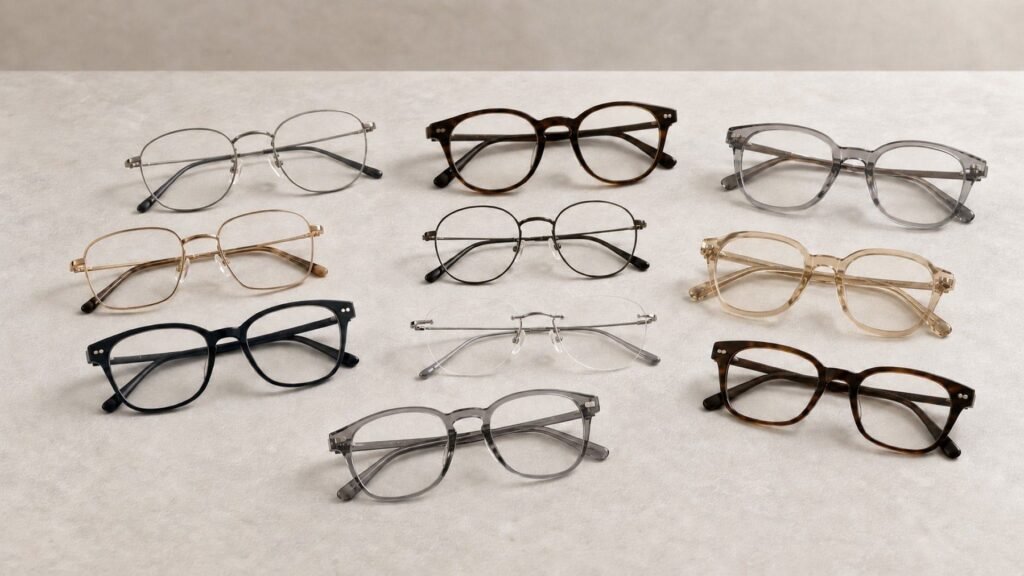
The best eyeglass brand is not always the one with the largest logo or the highest price. A good frame has to fit your face, hold its adjustment, suit your prescription, and still feel right after the novelty fades. This top 10 ranks brands with distinct design ideas and credible approaches to construction. It includes titanium specialists, Japanese craft houses, independent engineering-led labels, and heritage optical names. The order is an editorial assessment, not a sales chart, and the criteria are explained below.
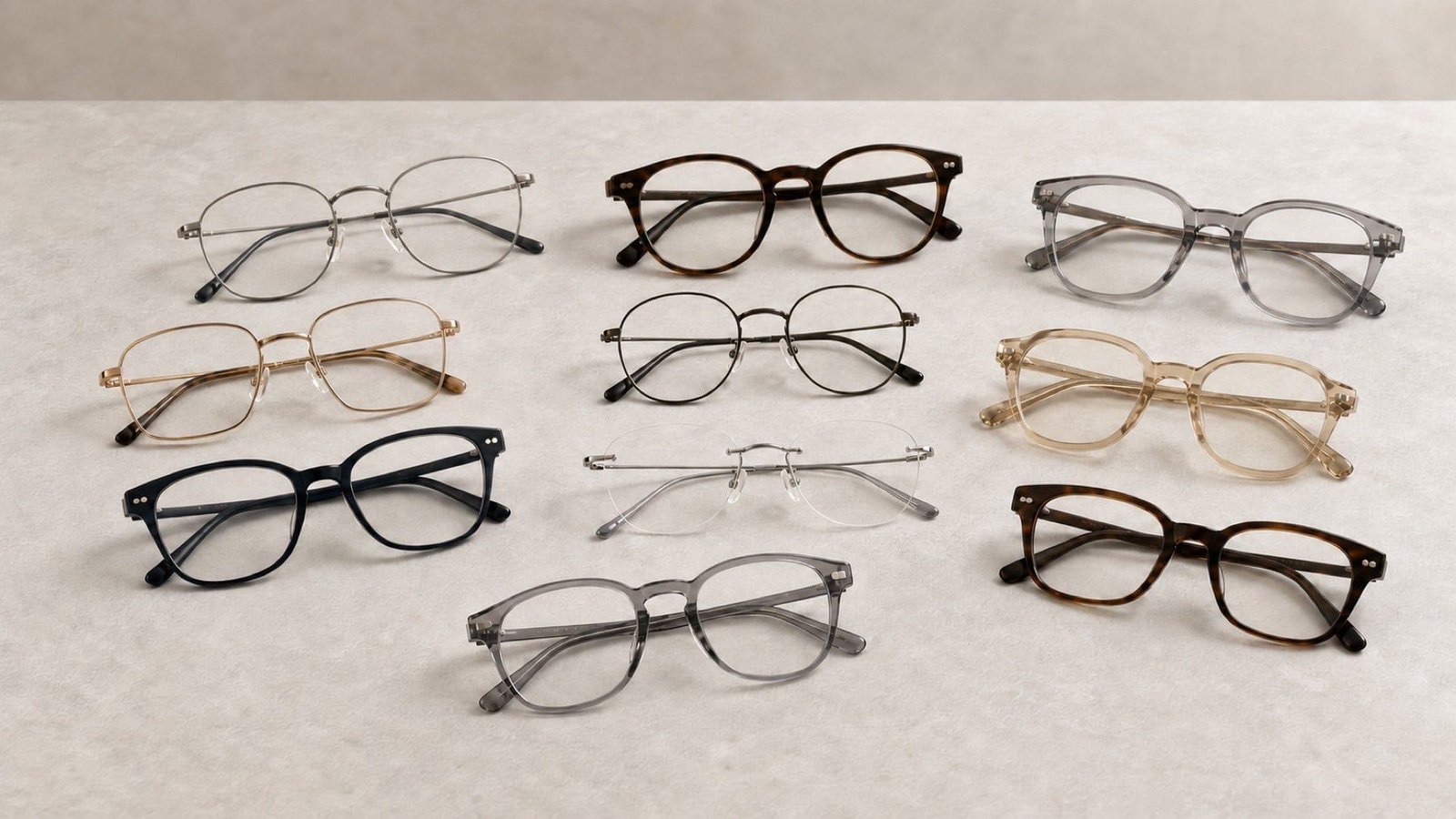
How we ranked the top eyeglass brands
We considered five things: a recognizable design identity, clear material and construction choices, fit options, consistency across collections, and the likely experience of owning the frame. We gave extra credit when a brand explains how its frames are made instead of relying on vague luxury language.
No ranking can replace an in-person fitting. Bridge shape, lens width, temple length, prescription, and adjustment matter more than a name printed inside the temple. Use this list as a starting point, then judge the actual frame on your face.
Top 10 eyeglass brands at a glance
| Rank | Brand | Best for | Standout trait |
|---|---|---|---|
| 10 | MOSCOT | Heritage acetate | New York optical identity |
| 9 | Garrett Leight | Relaxed everyday style | California design with Japanese production |
| 8 | Oliver Peoples | Quiet luxury | Subtle, vintage-influenced shapes |
| 7 | ic! berlin | Technical metal frames | Removable screwless hinge |
| 6 | DITA | Detailed luxury construction | Complex Japanese-made frames |
| 5 | Silhouette | Very light rimless eyewear | Minimal screwless construction |
| 4 | Matsuda | Decorative metalwork | Japanese craft and engraved details |
| 3 | MYKITA | Modern industrial design | Exposed spiral hinge language |
| 2 | MASUNAGA | Refined Japanese optical craft | Balanced finishing and restraint |
| 1 | LINDBERG | Lightweight engineering | Modular, screw-free titanium systems |
10. MOSCOT
Best for: People who want a strong acetate frame with real optical-store heritage.
MOSCOT is closely tied to New York eyewear. Its official history traces the family business to Hyman Moscot’s pushcart on Orchard Street in 1899 and the first shop in 1915. That history gives the collection a coherent visual language: rounded lenses, keyhole bridges, sturdy acetate, and familiar mid-century proportions.
The appeal is personality rather than hidden engineering. Models such as the LEMTOSH are easy to recognize, which can be a benefit if you want a frame to shape your look. It can also be a drawback if you prefer eyewear that disappears on the face.
Check the bridge carefully. A thick acetate bridge offers little room for adjustment, and the same famous shape will not sit well on every nose. Try more than one size and look for even contact rather than choosing by lens width alone.
9. Garrett Leight
Best for: Easygoing optical frames that feel current without chasing short trends.
Garrett Leight started in Venice Beach in 2010. The brand says its frames are designed in Los Angeles and now crafted in Japan, using acetate and metals sourced from specialist suppliers. The collection often updates classic P3, square, and softly upswept shapes with calm colors and wearable proportions.
This is a useful middle ground between anonymous basics and assertive statement eyewear. The frames tend to work with a wardrobe rather than dominate it. The tradeoff is that a restrained acetate design may not show its value at a glance, so fit and finishing should carry the decision.
Inspect the frame from the top. Both rims should follow the same plane, the temples should open evenly, and the acetate around each lens should have a clean, consistent polish.
8. Oliver Peoples
Best for: Understated luxury and vintage-inspired shapes with minimal branding.
Oliver Peoples opened its first boutique on Sunset Boulevard in 1987. The brand’s own account links its design identity to a collection of vintage American eyewear and the culture of Los Angeles. That influence still appears in fine rims, muted colors, filigree details, and shapes that feel familiar without being literal reproductions.
The strongest Oliver Peoples frames reward close viewing. A small plaque, a well-drawn brow line, or a carefully chosen lens shape matters more than a loud logo. Buyers who want obvious brand recognition may find the designs too discreet.
Do not let the styling distract from practical details. Confirm that the bridge works with your nose and that any decorative temple hardware does not create pressure behind the ears. For a strong prescription, ask whether the selected rim can conceal the lens edge.
7. ic! berlin
Best for: Wearers who like thin metal frames with visible mechanical logic.
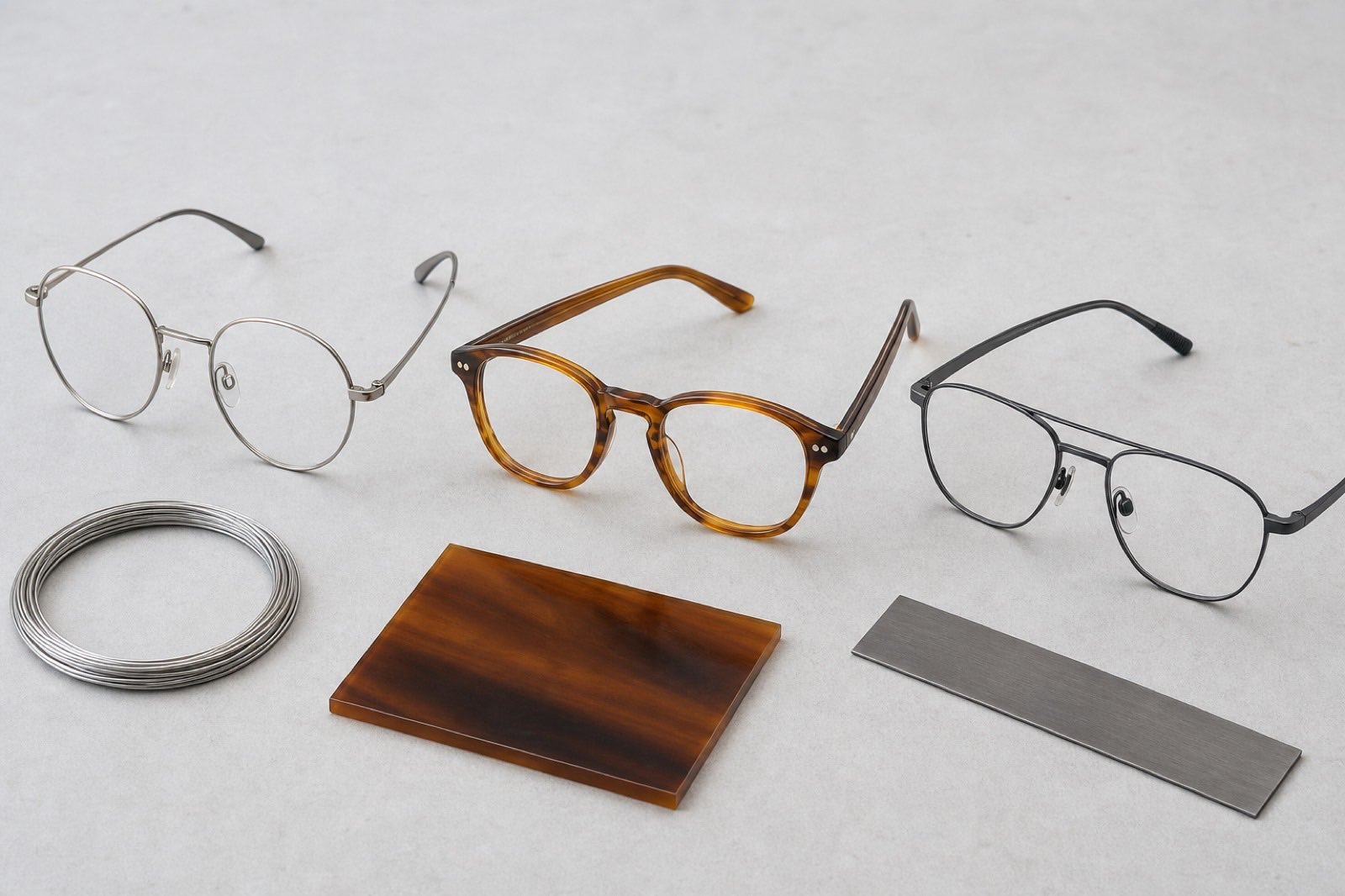
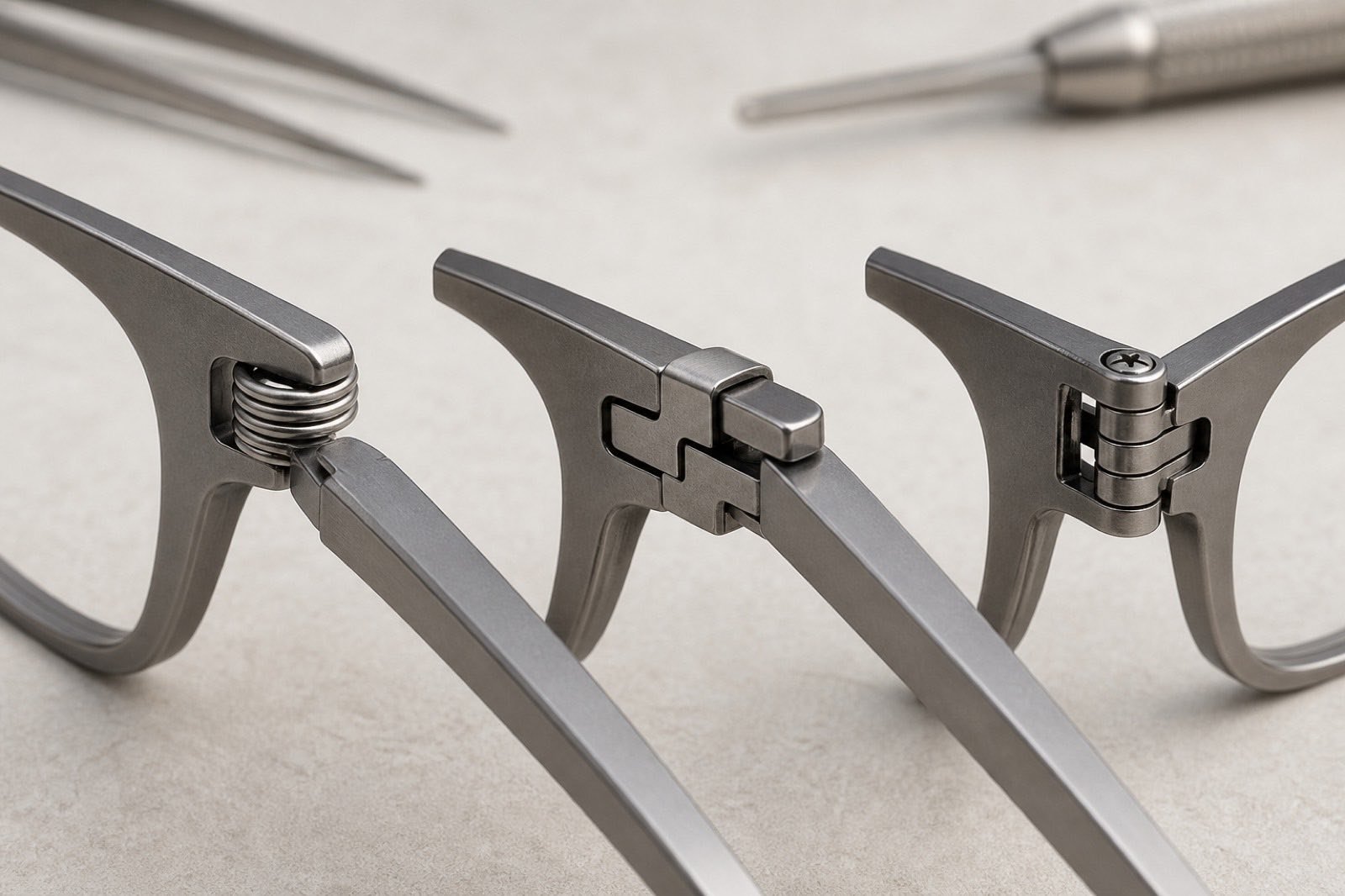
Founded in 1996, ic! berlin built its identity around a screwless sheet-metal hinge. The hinge uses interlocking parts and a removable clip instead of a conventional hinge screw. The result is both a functional mechanism and the brand’s most recognizable design detail. Frames are handcrafted in Berlin in stainless steel or titanium.
The flat metal construction feels crisp and modern. It can also recover from a temple being knocked off the hinge without leaving a lost screw behind. That does not make the frame indestructible. Thin sheet metal can still bend, and repeated poor adjustments can change the fit.
Ask the optician to show you how the hinge reconnects and how the frame should be handled during cleaning. Check that replacement clips, nose pads, and temple parts are available through the seller.
6. DITA
Best for: Buyers who want bold luxury frames with dense, precise detailing.
DITA was founded in 1995 and says it has focused production in Japan since 1999. According to its craftsmanship page, a frame may pass through as many as 350 steps over eight months, with materials that include Japanese acetate and beta titanium. Those figures are brand-reported, but the finished products do make construction a visible part of the design.
DITA often uses stepped rims, custom hardware, contrasting metals, thick acetate, and large lens shapes. The effect is deliberate and architectural. It suits someone who wants eyewear to be a central accessory, but some models are heavier or visually stronger than an everyday minimalist frame.
Try the frame with your actual prescription, not just clear demonstration lenses. Large lenses and thick rims can change weight and balance once prescription lenses are fitted. Look for stable contact at the bridge and enough temple spread without side pressure.
5. Silhouette
Best for: People who want the lightest possible look and very little frame in their field of view.
Silhouette began in Austria in 1964 and is best known for rimless eyewear. Its Titan Minimal Art system uses high-tech titanium and a screwless lens mounting approach. With no full rim around the lenses, the frame can feel unusually light and visually quiet.
Rimless construction also gives the wearer more freedom to choose a lens shape. The lens is part of the structure, however, so lens material, drilling quality, and mounting tension matter. A careless installation can create stress around the drill holes.
Choose an optician experienced with rimless glazing. Ask which lens materials are suitable for your prescription, whether replacement bridge and temple parts remain available, and how the lenses should be cleaned without twisting the mounts.
4. Matsuda
Best for: Collectors who appreciate engraved metal, layered construction, and Japanese decorative craft.
Matsuda frames are crafted in Sabae, Japan. The brand says a model can take up to two years and as many as 250 steps to produce. Its palette includes titanium, stainless steel, Japanese acetate, and precious-metal finishes. Fine engraving and sculpted hardware often turn functional parts into ornament.
The detailing is not shy. Even a thin Matsuda frame may reveal patterned temples, layered rims, or an elaborate bridge at close range. This makes the brand compelling for buyers who enjoy objects with visible workmanship. It also means a design may be harder to pair with every setting than a plain wire frame.
Inspect how the decorative parts meet. Edges should feel smooth, soldered or joined areas should look clean, and the finish should be even in recessed details. Ask how refinishing and replacement parts are handled before treating the frame as a long-term purchase.
3. MYKITA
Best for: Contemporary design with a light, industrial feel.
MYKITA made the hinge into a graphic feature. Its first collection openly displayed a coiled spiral hinge, turning a technical solution into the brand’s visual signature. The thin metal construction, controlled color, and restrained branding give many models a clean but recognizable profile.
This approach works well for someone who likes modern objects and wants a frame that feels engineered without looking clinical. MYKITA also offers acetate and combined constructions, so the collection is broader than its early sheet-metal identity suggests.
Pay attention to temple tension and nose-pad position. A light frame can still become uncomfortable if it grips the head or places too much load on a small contact area. Ask the fitter to adjust both sides evenly and confirm that the temples close without rubbing the lenses.
2. MASUNAGA
Best for: Buyers who want careful Japanese finishing without excessive ornament.
MASUNAGA was established in 1905 as part of an effort to build an eyewear industry in Fukui. Its craftsmanship history connects the brand to the development of that local production base. Current frames often combine balanced proportions, clean acetate work, and precise metal details.
The design language is quieter than Matsuda and less industrial than MYKITA. That restraint helps a good MASUNAGA frame stay relevant for years. It also asks the buyer to notice alignment, polish, edge treatment, and fit rather than depend on a dramatic first impression.
Check symmetry at the brow and bridge, then examine the transition between metal and acetate on combination models. Good finishing cannot rescue the wrong size, so compare bridge options and temple lengths before settling on a shape.
1. LINDBERG
Best for: Lightweight, highly considered frames with modular choices and minimal hardware.
LINDBERG was founded in 1986 by architect Henrik Lindberg and optometrist Poul-Jorn Lindberg. The Danish company built its reputation on frames made without conventional screws or rivets. Its titanium collections use patented hinge solutions and fine wire or sheet components to reduce visible hardware.
LINDBERG takes first place because design, material, and fitting form one system. Many models offer choices in lens shape, color, temple length, and nose-bridge configuration. The result can be highly personal without becoming decorative. It is a practical kind of luxury: less material, fewer obvious parts, and close attention to how the frame sits.
The system depends on competent fitting and genuine parts. A frame this light can feel wrong if the bridge or temple geometry is poorly chosen. Buy through a trained seller, ask about part support, and make sure adjustments are made with the correct tools.
What the ranking does not tell you
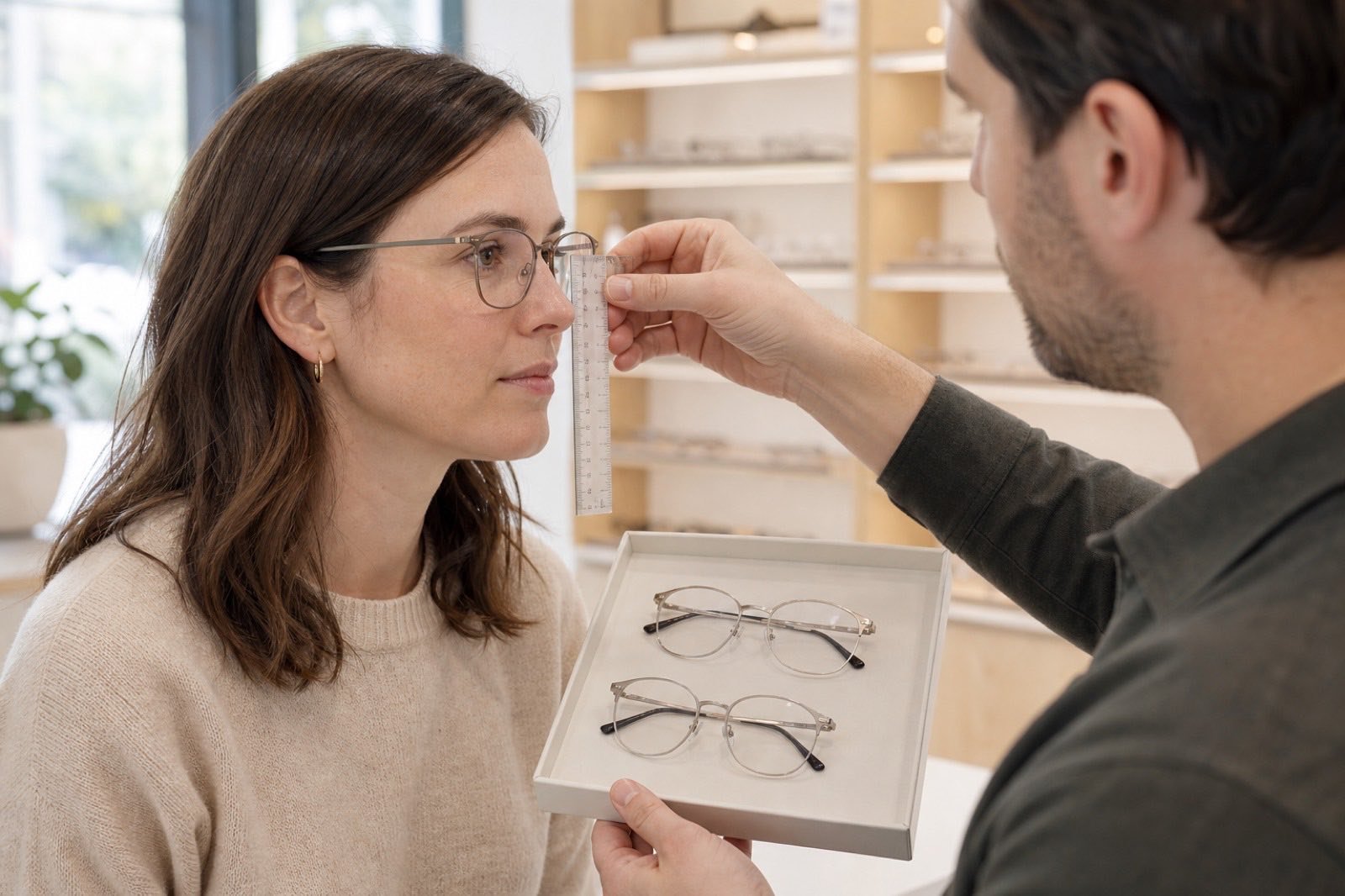
A first-place brand can still make the wrong frame for your face. A tenth-place brand can be the better purchase if its bridge, proportions, and visual character suit you. The best decision comes from matching the frame to your prescription and daily routine.
Start with three checks:
- Fit before color. The bridge should carry the frame without pinching or sliding, and the temples should not bow outward under pressure.
- Construction before decoration. Look at hinge movement, rim alignment, soldered joints, lens seating, and finish consistency.
- Service before novelty. Ask whether the seller can adjust the frame, source pads and temple tips, and support repairs.
Material labels also need context. “Titanium” may describe commercially pure titanium, beta titanium, or one titanium component in a mixed-material frame. Our guides to pure titanium eyewear and beta titanium explain why that distinction matters.
How to compare two frames in a store
Place both frames on a flat surface and check whether they sit evenly. Open and close the temples slowly. The motion should feel controlled, with no grinding, abrupt looseness, or obvious difference between sides. Look along the top rim for twist and inspect joints under direct light.
Then wear each frame for at least several minutes. Notice pressure at the nose, behind the ears, and at the side of the head. Tilt your head forward and look down. A suitable frame should remain stable without the temples clamping hard.
Finally, discuss the lenses. Strong prescriptions, progressive lenses, and large lens shapes can change the finished weight and appearance. Frame selection and lens design should be treated as one decision. For a more detailed inspection list, see our guide to eyeglass frame quality control.
Frequently asked questions
What is the best eyeglass brand overall?
LINDBERG ranks first in this list for its lightweight engineering, modular fitting options, and coherent screw-free design. That does not make it best for every wearer. MOSCOT may suit someone who wants bold acetate, while Silhouette may be better for a nearly invisible rimless frame.
Are expensive eyeglass brands always better?
No. A higher price may reflect labor, materials, distribution, design, or brand positioning. Judge the actual frame for fit, alignment, hinge quality, finish, part availability, and suitability for your lenses.
Which eyeglass brands are best for titanium frames?
LINDBERG, Silhouette, DITA, Matsuda, and ic! berlin all offer notable titanium designs, but they use the material in different ways. Compare the whole construction rather than the word “titanium” alone. If low weight is the main goal, begin with our guide to titanium eyewear.
Which brand is best for classic acetate frames?
MOSCOT, Garrett Leight, Oliver Peoples, and MASUNAGA are strong starting points. The best choice depends on bridge fit, thickness, color, and how much visual presence you want.
How long should a premium eyeglass frame last?
There is no honest universal number. Wear frequency, sweat, handling, adjustment, finish, hinge design, and access to replacement parts all affect lifespan. A well-fitted frame that can be serviced is usually a better long-term bet than a delicate frame bought for its name alone.
Find the right titanium frame for your market
This ranking is written for frame buyers, but the same questions matter when developing a collection: material grade, construction, fit, finish, testing, and serviceability. Explore Titaniumframes to learn how titanium eyewear is designed and manufactured, or to discuss an OEM frame project built around clear material and quality requirements.