
Design and tooling ownership
State ownership of the approved design and project tooling in the signed project terms.
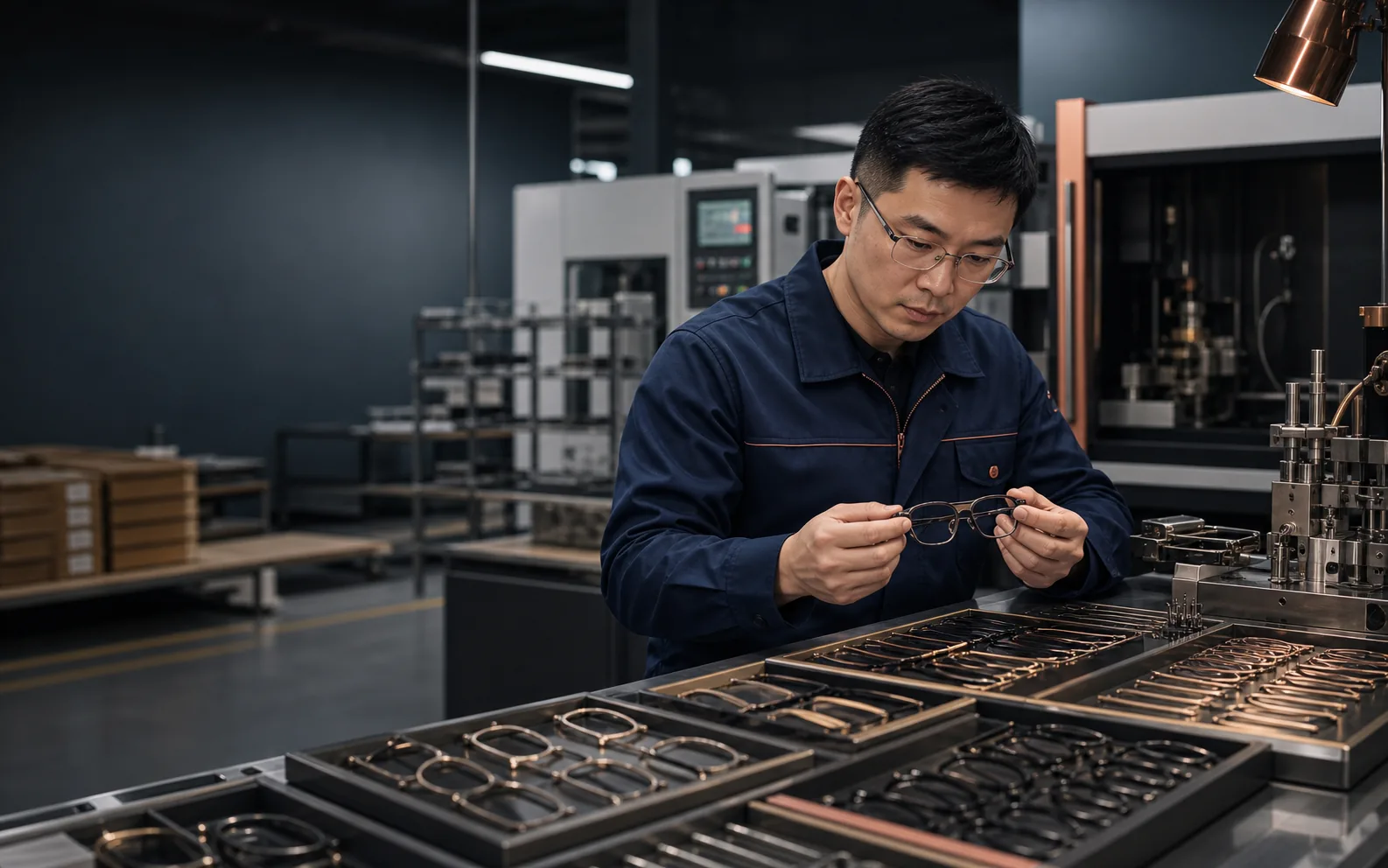
China eyeglass frame OEM factory
OEM manufacturing for metal and acetate eyeglass frames—starting from a controlled small batch, with project terms, material records, sample approval, and measurable QC agreed before production.
PDF, JPG, PNG or WebP · up to 3 files
Before you pay for tooling
A serious OEM project should define who owns the design, how tooling can be used, which documents are supplied, and what is checked before shipment. These terms are confirmed project by project in the quotation or agreement.
State ownership of the approved design and project tooling in the signed project terms.
Add a project-specific non-reuse term so the approved design is not offered to another customer.
List the selected material source and the material certificates or records available for that exact project.
Confirm the destination market and list the applicable documents that will be supplied for the selected SKU.
Approve dimensions, appearance, function, fit, packing, and sampling method instead of relying on a vague quality promise.
Use the inquiry upload for sketches, sample photos, or a technical pack; files are attached to the inquiry email.
Do not leave these terms for later. Add them to the first project review.
Review my project termsTwo core manufacturing routes
Start with a drawing, sample photo, reference frame, or technical pack. We review the construction and open decisions before quoting tooling, sampling, and production.
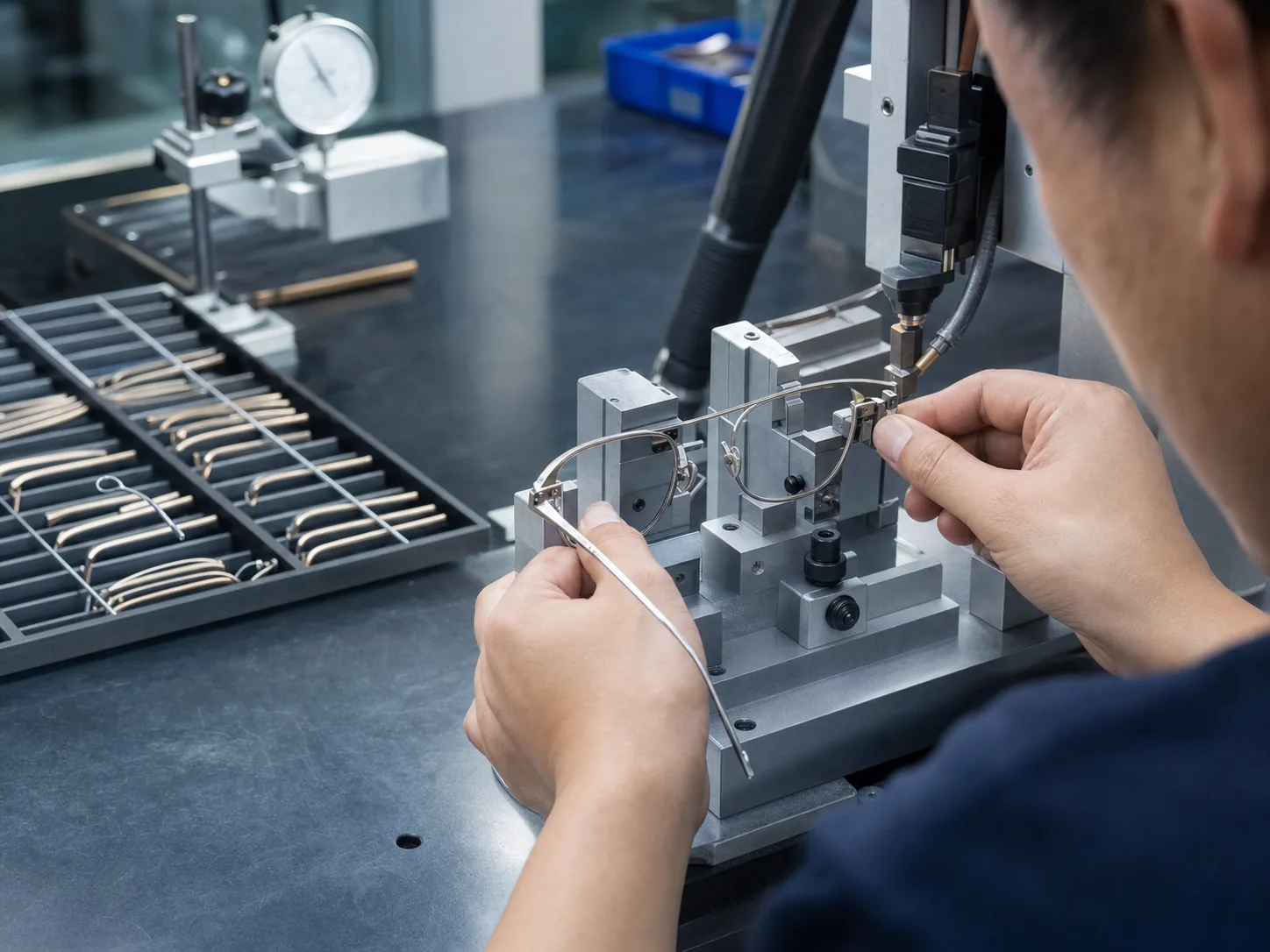
Metal frames
Develop the front, bridge, temples, hinges, nose-pad system, finish, components, and branding as one controlled frame specification.
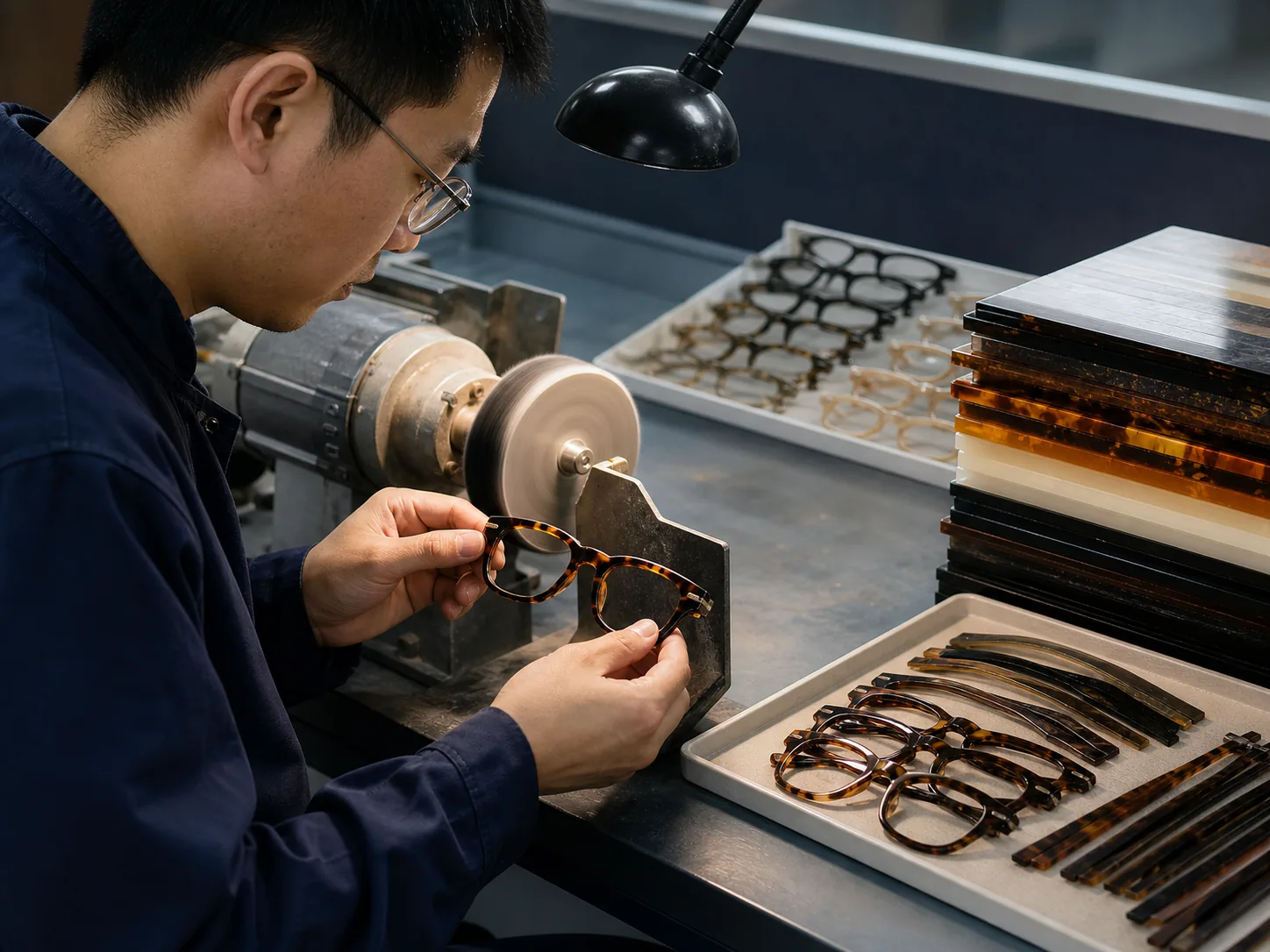
Acetate frames
Develop frame shape, sheet selection, lamination, thickness, edge profile, polishing, hardware, and branding for a coherent collection.
Lower the risk of the first order
Review cost against material, construction, finish, inspection, and packaging so savings do not silently remove the product requirements that matter.
The applicable mold-fee reduction is calculated from the confirmed order quantity and stated in the project quotation.
Use a qualified 100-pair starting order to test the model, finish, fit, packaging, and market response before planning a larger run.
More than a logo on one frame
Plan related shapes, shared components, color allocation, branding, and packaging as a collection. This makes later sampling, replenishment, and scale-up easier to control.
Plan My Frame CollectionDefine customer, price level, style direction, model count, and launch plan.
Map shapes, sizes, shared components, colors, and logo placement across the series.
Approve samples and use a controlled first order to validate the product and market.
Use confirmed demand to plan larger quantities, color extensions, and replenishment.
A decision-gated workflow
The same approved requirements move from feasibility review to sampling, production, inspection, and packing.
Send a sketch, sample photo, technical pack, quantity plan, and destination market.
Review construction, materials, tooling, open decisions, mold-fee tier, and document scope.
Build the sample and record the dimensions, finish, function, branding, and changes.
Freeze the approved sample, specification, packing, inspection points, and production schedule.
Control incoming materials, in-process construction, assembly, appearance, fit, and lot inspection.
Verify quantity, labels, packaging, required project documents, and shipping handover.
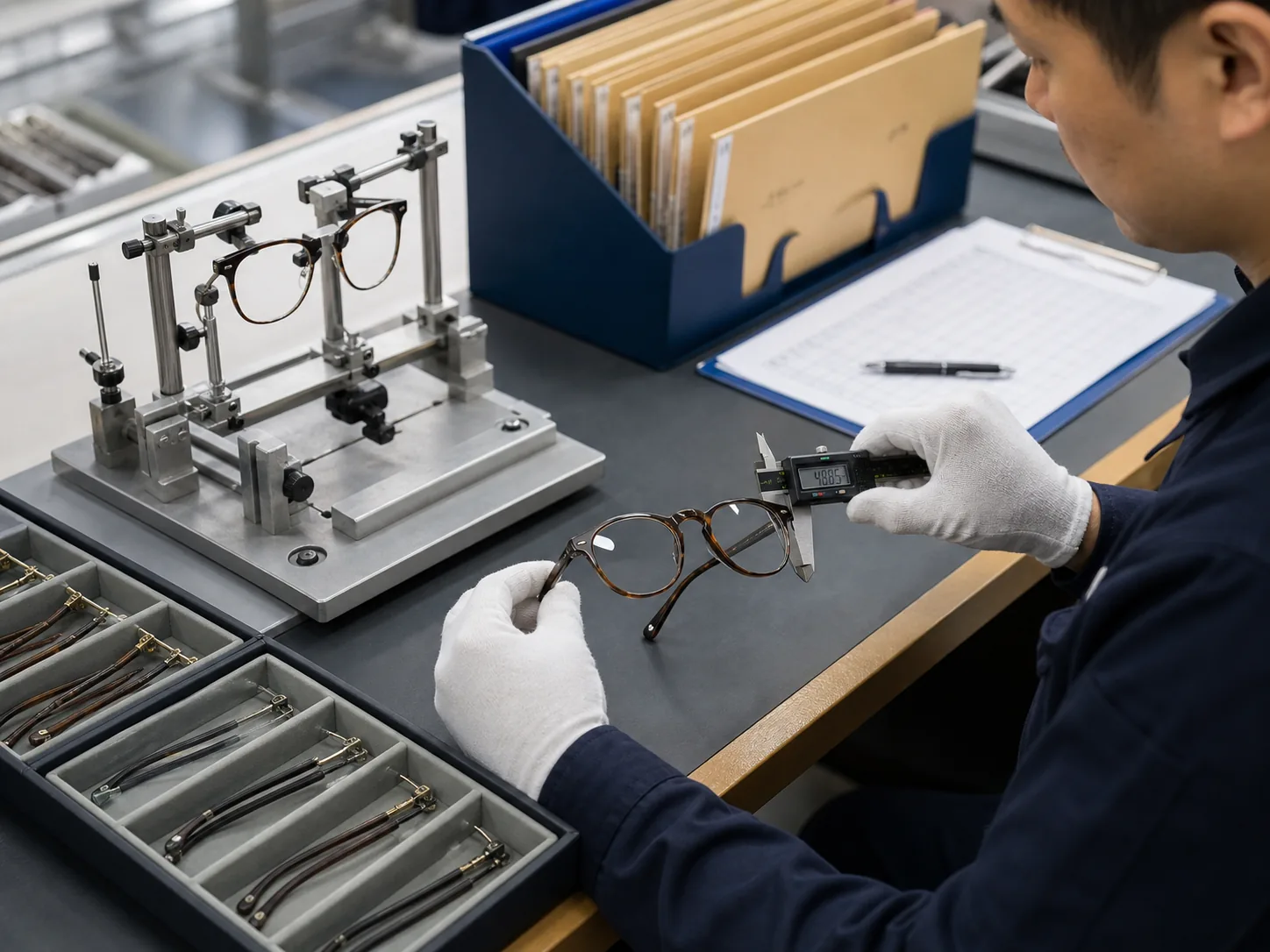
Replace “strict QC” with checkpoints
The inspection plan should follow the frame specification, approved sample, destination, and agreed acceptance method. Material and compliance documents are listed for the actual project rather than implied by a generic badge.
Record the selected material, lot or supplier reference, color, and available supporting documents.
Check key dimensions, joints, hinge position, component fit, and process-specific workmanship.
Compare color, plating or polish, logo, surface, symmetry, and visible defects to the approved reference.
Check hinge movement, temple opening, frame alignment, nose-pad position, screw security, and basic wearing fit.
Apply the agreed sampling method to quantity, appearance, function, labels, packaging, and document pack.
Questions purchasing teams ask
For an answer tied to your design, upload the current files and expected quantity.
Ask about my designThe starting quantity is 100 pairs for a qualified project. The final MOQ depends on construction, material, color allocation, components, branding, and packaging.
The sample schedule is confirmed after the design and required tooling are reviewed. The production schedule is locked before the order, based on the approved sample, material, finish, quantity, packaging, and document scope.
Ownership and permitted use should be written into the quotation or agreement before tooling begins. Ask for the exact design-ownership, tooling-ownership, storage, maintenance, and reuse terms for your project.
Add a project-specific non-reuse term to the signed agreement. This makes the approved design and the restriction on offering it to another customer explicit rather than relying on a verbal promise.
Document availability depends on the selected material, product, packaging, and destination. Share the US sales channel and SKU requirements so the quotation can list the material records and project documents that will actually be supplied.
Yes. The inquiry form accepts PDF, JPG, PNG, and WebP files. You can upload a sketch, sample photo, or technical pack with the frame category and expected quantity.
Private project review
Send the information you have now. A sketch, sample photo, or technical pack helps us review construction, MOQ, tooling, sampling, material records, QC, and next steps.