
Top 10 Luxury Eyeglass Brands: Craft, Materials, and Value
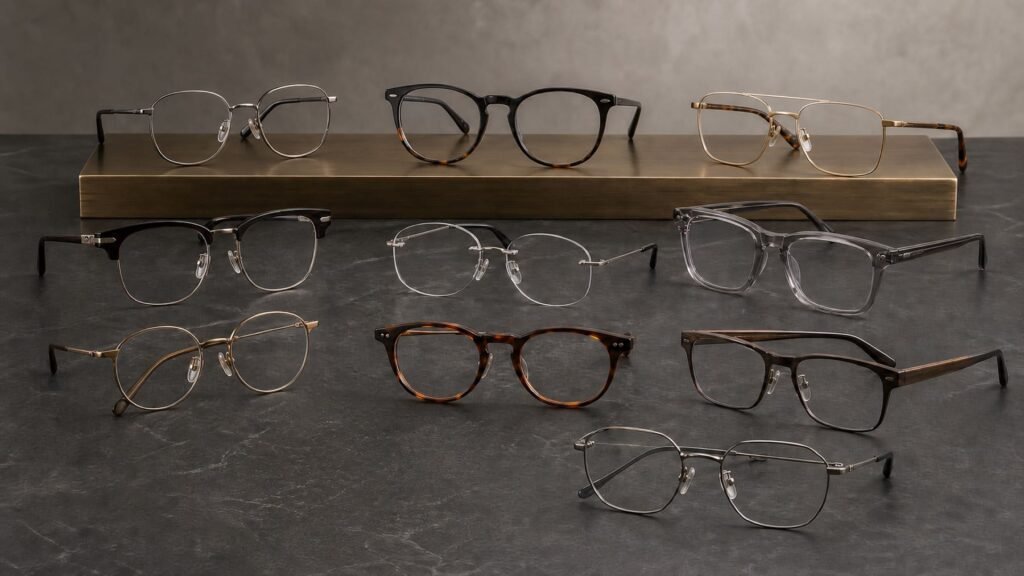
Luxury eyewear can mean a famous logo, rare material, difficult construction, or simply a frame that fits beautifully. Those things do not always arrive together. Our top 10 luxury eyeglass brands list looks past price and name recognition to examine what a buyer can see and verify. We considered material disclosure, manufacturing identity, frame engineering, finishing, fit, and after-sales support. The order is an editorial judgment, not a sales chart, and a lower-ranked brand may still make the best frame for your face.
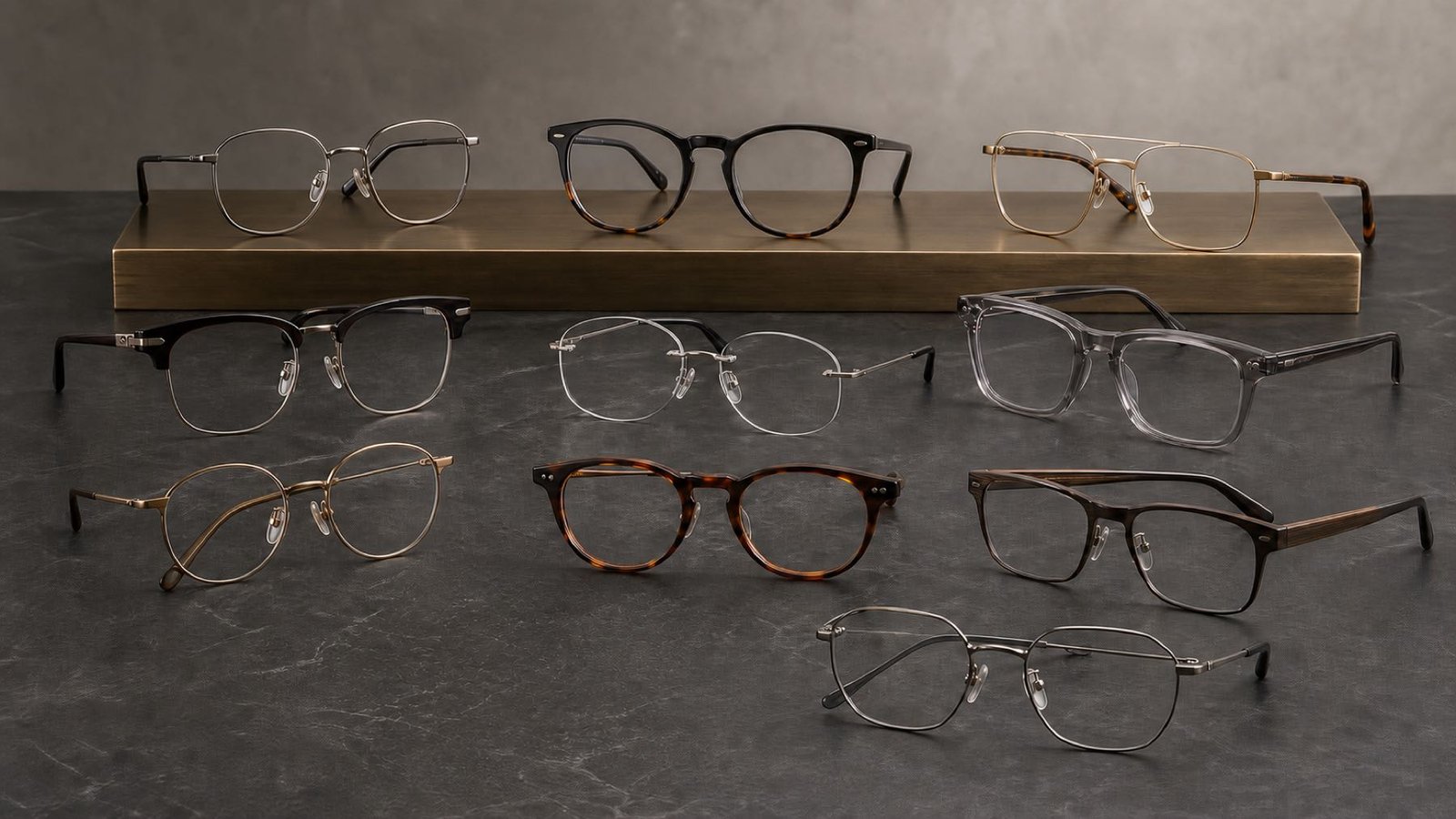
How we ranked luxury eyeglass brands
Luxury should add something to the object. It might be a screwless titanium hinge, a complex hand finish, a tightly controlled limited run, solid precious metal, or unusually broad fitting options. A large logo alone received little credit.
We also looked at transparency. Brands that identify where a frame is made, describe the materials, publish dimensions, and explain service routes make it easier to judge value. Marketing claims about production time or step counts are identified as brand-reported figures rather than independent measurements.
Price did not decide the order. This ranking asks a more useful question: what does the premium buy?
Top 10 luxury eyeglass brands at a glance
| Rank | Brand | Best for | Where the premium goes |
|---|---|---|---|
| 10 | Gucci | Recognizable fashion codes | Italian styling and house motifs |
| 9 | Prada | Modern fashion shapes | Strong silhouettes and material updates |
| 8 | Oliver Peoples | Quiet luxury | Subtle detailing and wearable proportions |
| 7 | Akoni | Technical Japanese-made luxury | Titanium, acetate, and small hardware details |
| 6 | MAYBACH Eyewear | Rare materials | German handwork and precious finishes |
| 5 | Matsuda | Decorative Japanese craft | Engraving, lacquer, and layered metalwork |
| 4 | LINDBERG | Minimal luxury | Lightweight engineering and personalization |
| 3 | Jacques Marie Mage | Collectible statement frames | Limited runs and dense construction |
| 2 | DITA | Complex luxury engineering | Japanese production and custom components |
| 1 | Cartier | Jewelry-influenced eyewear | Noble materials, design codes, and service network |
10. Gucci
Gucci is best for buyers who want eyewear to read as fashion immediately. The house carries familiar motifs into its optical collection, including the GG, Horsebit, Web, and bamboo references. An official optical product page for a current acetate model lists Italian production, full frame measurements, and care instructions.
The design language is the reason to buy. Gucci offers strong color, large silhouettes, and visible house codes that connect the frame to the rest of the fashion collection. If that recognition matters to you, the logo is part of the value rather than a distraction.
Construction varies by model, so inspect the individual frame instead of treating the name as a quality grade. Check acetate polish around the lens groove, hinge seating, temple alignment, and whether the bridge works without adjustment. A conspicuous temple emblem will not make a poor bridge fit better.
9. Prada
Prada earns its place through shape and proportion. The eyewear often uses thick geometric fronts, narrow ovals, sharp temples, or an oversized profile that feels connected to the house’s fashion collections. Some current models use materials such as recycled bio-acetate, while others combine metal fronts with acetate temples.
The brand is a good choice when the silhouette is the main event. Prada can make an ordinary black frame look deliberate through brow shape, temple thickness, and the position of its triangular plaque. That design authorship has value, even when the underlying construction is conventional.
Look at the product details before paying. Prada’s official pages may list the frame material and dimensions but not the manufacturing depth found on specialist eyewear sites. Compare the actual hinge, finish, and fit with a less famous alternative at the same price. Buy the Prada when its shape wins on your face, not because the name promises an invisible technical advantage.
8. Oliver Peoples
Oliver Peoples is the quiet option in this list. The brand began with a West Hollywood boutique in 1987 and built its look around vintage American eyewear and Los Angeles culture. Its official history describes logo-free detailing and a relationship with Japanese eyewear production, including Japan-made titanium and acetate styles.
Many frames use fine rims, softened colors, subtle filigree, and proportions that do not announce themselves across a room. This makes Oliver Peoples easier to wear every day than some collectible luxury frames. It can also make the premium harder to spot in a product photo.
Judge the close details. The rims should be symmetrical, any filigree should be clean, and the temple action should feel even. Check the country of origin and materials on the exact model because the collection is broad. The best Oliver Peoples purchase is a frame whose restraint suits you and whose fit does not need to be forced.
7. Akoni
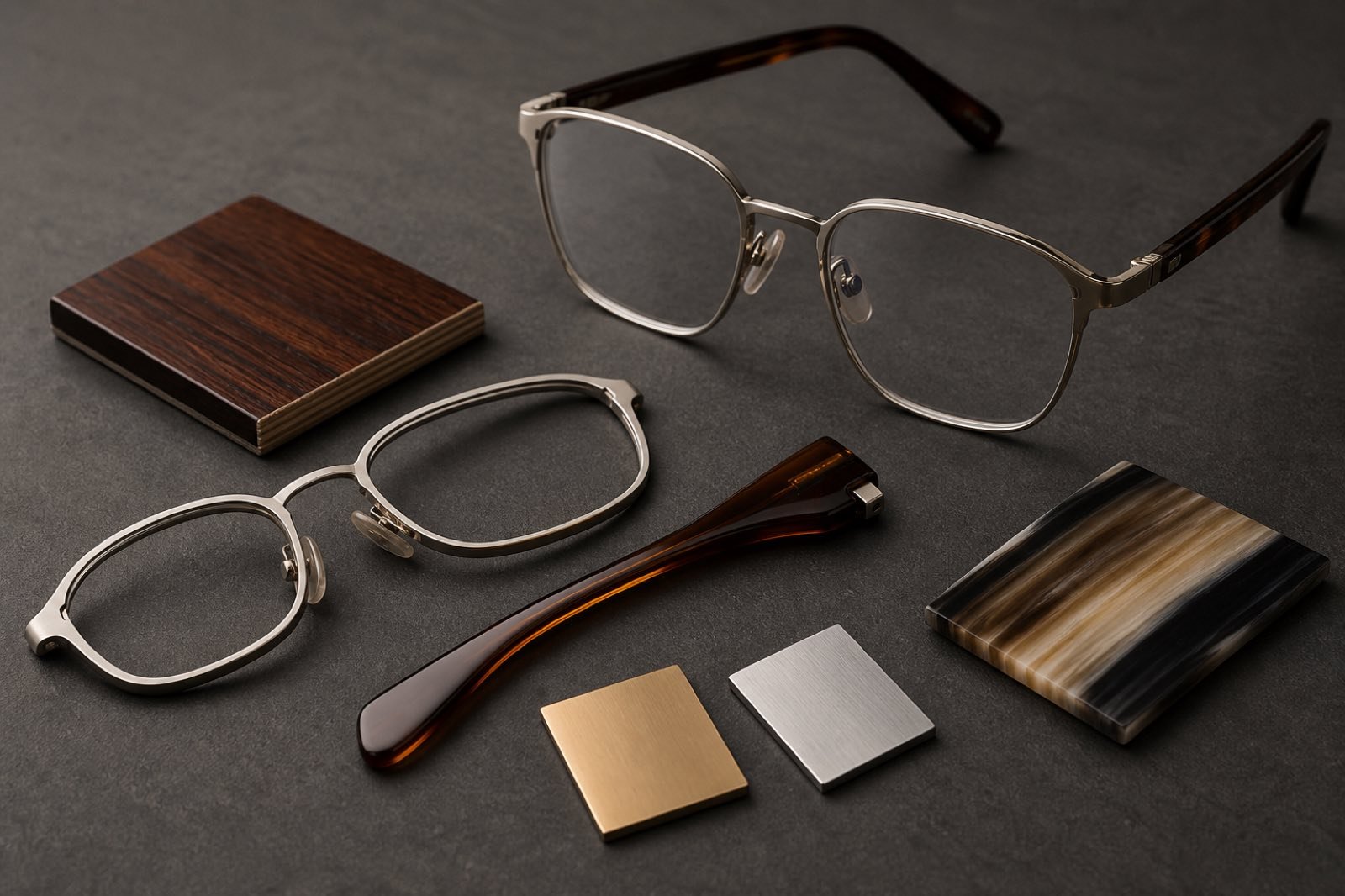
Akoni approaches luxury like a watch designer. Knurled temples, ceramic nose pads, threaded fasteners, side shields, and layered constructions put attention on small parts. The company says its frames are made in Japan and uses Japanese titanium and acetate across the collection.
The useful part of Akoni’s website is its model-level disclosure. A product such as the Proteus Rx identifies the frame and temple material, nose-pad construction, weight, dimensions, and country of origin. Some models also offer universal and alternative fits. That information makes the premium easier to evaluate.
Akoni’s detailing can become visually busy, and a 20-gram rimless frame will wear differently from a 30-gram full titanium model. Try the exact size and check whether decorative side parts add width or pressure. Buyers should also confirm access to branded screws, pads, and temple components before purchase.
6. MAYBACH Eyewear
MAYBACH makes the strongest case for material rarity. Its official catalog describes pure titanium with precious-metal plating, buffalo horn, fine wood, leather, and special models in solid gold or with diamonds. The company says its frames are handmade in its German atelier.
That material range creates real variation between frames. Natural horn has unique color and a warm feel, while layered wood needs careful sealing and handling. Gold and platinum finishes change appearance and price but do not automatically improve fit or durability. Rare material is a design choice, not a substitute for sound construction.
Service matters more here than with a simple acetate frame. MAYBACH states that authorized retailers sell and maintain its products. Ask how horn conditioning, refinishing, replacement temples, and precious components are handled. A buyer should be comfortable with the maintenance route before choosing a delicate or uncommon material.
5. Matsuda
Matsuda is for someone who wants to see the hand of the maker. Frames often use engraved titanium, aged Japanese acetate, lacquered details, layered rims, and precious-metal finishes. The company says its Sabae workshops may take as many as 250 steps and up to two years to bring a design to market.
The brand’s strength is the way ornament follows structure. Filigree appears on bridges, rims, wire cores, and temple hardware rather than being added as a separate badge. Even a rimless Matsuda can carry a great deal of visual information at the bridge and temples.
Close inspection is essential. Engraving should be crisp, recessed finishes should be even, and joints should not have rough edges. Some models are narrow or use strong geometric lens shapes, so the frame can fail on fit even when the metalwork is excellent. Check dimensions and prescription suitability before falling for the detail.
4. LINDBERG
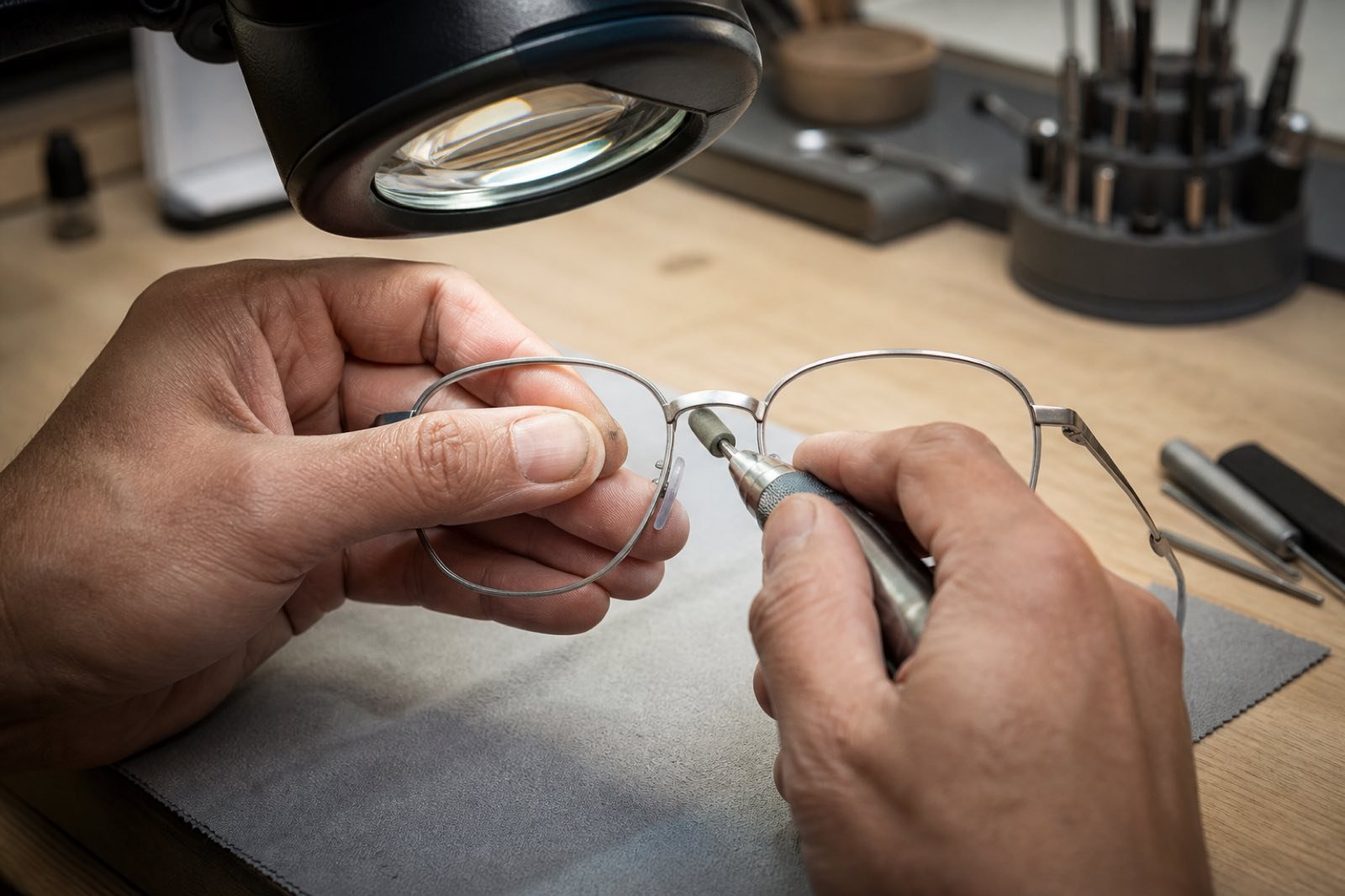
LINDBERG treats luxury as reduction. Its frames are designed and made in Denmark, use screwless construction, and offer extensive choices in shape, color, temple, and bridge configuration. The brand’s Precious collection extends that system into 18K solid gold, platinum, buffalo horn, and diamonds.
The regular titanium collections make the stronger value argument for most buyers. A light frame that fits precisely and avoids loose hinge screws can improve daily ownership more than a decorative flourish. The Precious range shows that minimal engineering and traditional luxury materials can coexist, though the price climbs rapidly.
LINDBERG depends on correct configuration and trained adjustment. Ask the dealer which bridge and temple options were chosen, what can be changed after delivery, and how replacement parts are ordered. The frame should feel almost uneventful on the face. If it pinches, slides, or twists, the configuration is wrong regardless of how little it weighs.
3. Jacques Marie Mage
Jacques Marie Mage, often shortened to JMM, makes collectible eyewear with a strong historical point of view. The Los Angeles design house produces limited editions in Japan and Italy. Its craftsmanship page says a Japanese-made frame can involve more than 300 production steps, nearly 100 artisans, and an 18-month process.
Thick acetate, custom multi-barrel hinges, exposed wire cores, sculpted titanium, and limited color runs give JMM frames a recognizable physical presence. The edition number and storytelling are part of the appeal. This is closer to collecting than buying an anonymous daily appliance.
Scarcity can distort judgment. A limited number does not prove that the bridge suits you or that a heavy front will remain comfortable all day. Check the frame with your prescription lenses, confirm return and service terms, and resist buying a rare color before you have worn the same chassis for several minutes.
2. DITA
DITA ranks second because it makes complex construction visible and documents much of it. The brand says a frame may require as many as 350 steps over eight months, with production and finishing in Japan. Materials include Japanese acetate and beta titanium, often joined through custom hinge plates, proprietary screws, layered rims, and machined details.
The best DITA designs look engineered rather than decorated. Hardware helps define the frame, especially in the Grandmaster, Statesman, and titanium-led families. That character also brings weight and scale. Several designs are wide, thick, or long at the temple.
Treat published production numbers as brand claims and inspect the object. The frame should open evenly, custom screws should sit cleanly, and layered parts should meet without gaps. Ask whether your optician has access to the proprietary components. Standard repair parts may not fit a highly customized DITA assembly.
1. Cartier
Cartier takes first place because it connects eyewear to a mature jewelry design language while offering a wide material range and a defined service route. Its collections reuse motifs from Santos, Panthere, Premiere, and the classic C. Cartier’s eyewear FAQ lists horn, wood, leather, lacquer, and 18K gold among the materials used in its frames.
The top end is genuine precious eyewear rather than ordinary metal with a luxury logo. Cartier currently lists pieces in solid gold, horn, wood, and gemstone-set constructions alongside more conventional acetate and plated metal models. Its precious eyewear selection makes the material difference explicit.
Ownership still requires care. Cartier directs prescription-frame repairs through authorized eyewear retailers and evaluates service work before providing an estimate. Horn, wood, and precious finishes have different cleaning needs. Ask who will glaze, adjust, and service the exact frame before buying it. Cartier earns the top spot when the material, motif, fit, and support all matter to you. Buyers seeking only a clean optical frame can find better value lower in this list.
What makes luxury eyewear worth the price?
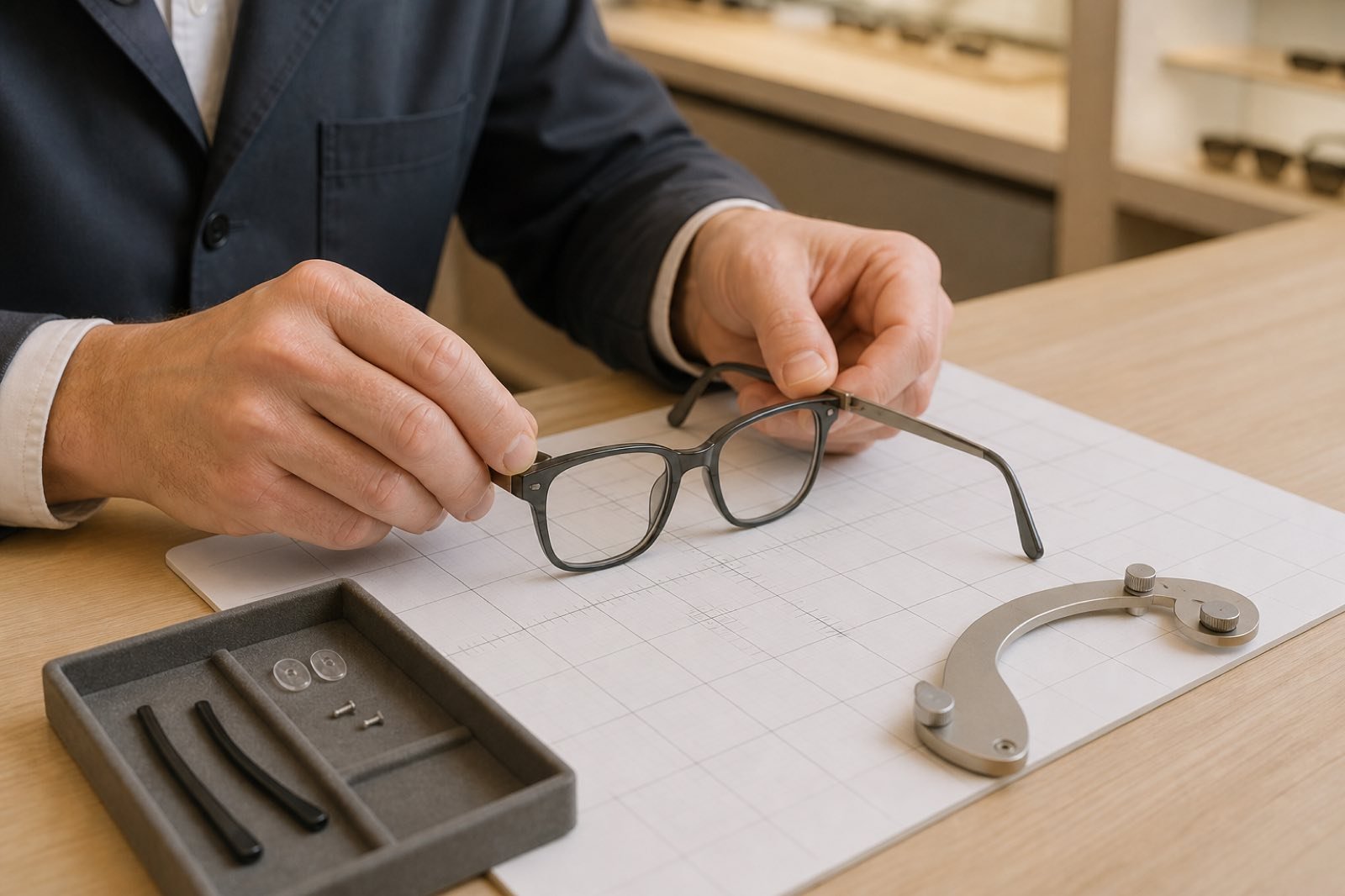
The premium is easier to justify when you can point to a physical difference. Look for a construction that solves a fit or weight problem, material that is difficult to work well, clean finishing under magnification, or service support that keeps the frame wearable.
Some costs are less tangible. Limited production, a designer’s authorship, retail presentation, and brand recognition can all be part of the purchase. There is nothing wrong with paying for those things, but call them what they are. Do not mistake exclusivity for a mechanical test result.
Our guide to eyeglass frame quality control explains the checks that remain relevant at every price. Rim alignment, hinge motion, lens retention, coating condition, and dimensional accuracy do not become optional when a frame arrives in a better box.
Five buyer checks before paying a luxury premium
- Wear the frame long enough to notice pressure at the bridge, temples, and behind the ears. Discuss how your prescription lenses will change the finished weight.
- Ask for the exact material. “Metal” and “titanium” are broad labels. Our guides to pure titanium eyewear and titanium alloys explain the difference.
- Inspect the joints and finish under direct light. Look along the top rim for twist, then check hinge seating, soldered areas, engravings, coatings, and the lens groove.
- Confirm the service path. Ask who supplies pads, screws, temples, and decorative parts, and whether an independent optician can adjust the frame safely.
- Separate design value from technical value. Decide how much you are paying for a silhouette or brand code and how much you are paying for material, labor, and support.
Frequently asked questions
What is the best luxury eyeglass brand?
Cartier ranks first here for material breadth, established design codes, and a defined service network. DITA may be a better choice for visible Japanese engineering, while LINDBERG is stronger for minimal weight and personalized configuration.
Are luxury eyeglass frames better quality?
Some are, but price and quality do not move together automatically. Luxury frames may use better finishing, uncommon materials, complex hardware, or smaller production runs. They can also charge heavily for brand recognition. Inspect the exact frame and verify the service route.
Which luxury eyeglass brands use titanium?
LINDBERG, DITA, Matsuda, Akoni, Cartier, and MAYBACH all offer titanium eyewear. They use the material differently, including thin wire, sheet construction, thick machined parts, beta titanium components, and precious finishes. Compare the whole frame rather than the material word alone.
Which luxury brand is best for understated glasses?
LINDBERG and Oliver Peoples are the strongest starting points in this list. LINDBERG focuses on light, screwless engineering. Oliver Peoples uses restrained shapes and subtle details with a vintage influence.
Are limited-edition eyeglass frames a good investment?
Buy them as objects you want to wear, not as guaranteed financial assets. Edition size may support collectibility, but condition, demand, authenticity, replacement parts, and resale access all affect value. A rare frame with the wrong fit is still the wrong frame.
Develop luxury titanium eyewear with clear specifications
Luxury becomes credible when the material, construction, finishing, and test requirements are defined before production. Explore Titaniumframes for practical guides to titanium frame design and manufacturing, or to discuss an OEM eyewear program with traceable materials and measurable quality requirements.